We say improved quality, improved performance, improved conditions, and improved results. These combinations matter because correct grammar alone does not always sound natural. Improved describes a completed result or a current state after change, while improving suggests an ongoing process. The verb “improve” refers to the action of making something better or enhancing its quality.
Rule 1: Choose the Method (Text or Call)
Each day, write down how you are doing mentally, emotionally and energy-wise. Sooner or later, the patterns that emerge might make working out seem like the obvious choice. Record yourself talking about your goals or performing awesome lifts, then post it on YouTube or Instagram, Niren recommends. If you’d rather not share with your real-life buds, find a likeminded community at GiveIt100.com.
achieving the goals you set for yourself
- These shakes, bars, and other products will control your calories while you use them, if you don’t make up the calories elsewhere.
- If you shed pounds too fast, you’ll lose muscle, bone, and water instead of fat, says the Academy of Nutrition and Dietetics.
- Whether it’s money on the line or someone verifying proof, consequences replace negotiation.
- Sharing goals and progress with a friend can boost motivation, especially in the beginning.
- For instance, let’s say the challenge is to reach 20 consecutive push-ups in 30 days.
- Connect to Apple Watch, Fitbit, Garmin, Samsung Health, Google Fit, Health Connect, smart scales, and many more.
Habitat is also a group accountability app in which you’ll track habits and goals in groups with your friends. You’ll work toward your individual goals, but you’ll do it in a group where you can motivate each other. YNAB is a budgeting and money-management app that helps you take control of your finances by assigning every dollar a job and tracking your spending against real goals. Truple is an accountability monitoring app that uses random screenshots and activity tracking to verify what’s happening on your devices in real time. The financial commitment of hiring a coach often acts as a strong motivator for accountability, too. By hiring a coach, you’re making a tangible investment in your health and fitness.
One of the main things to remember is that goal setting is a fluid process where the result should be that something meaningful has been accomplished. While motivation often takes center stage, another essential consideration is self-regulation, which refers to how much control someone has over their emotions and behaviors to achieve goals. Fitness goals are often challenging due to the time that needs to be invested and the physical exertion required. Therefore barriers to exercise can easily cause frustration and delay results.
Each body needs a UNIQUE approach. We’ll find out what works for YOU to get the best results.
By establishing an outcome goal to strive for, it becomes possible to create a plan that includes process and performance goals that will support the likelihood of success. CSA scores are essentially a measure of your overall safety as a company. To improve your CSA score, you should invest in a safety program with ongoing training and check-ins. Accidents happen, but it’s critical that you take steps to minimize your risk by regularly reviewing any harsh driving incidents. Whether it’s logging workouts, tracking habits, or syncing wearables, you’re creating a loop of behavior → visibility → reinforcement inside a system that looks and feels like your brand. Accountability for fitness and health goals has come a long way.
Accountability coaching works in multiple ways within our program!
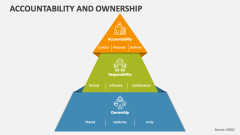
The limitation with a saturated model is that the model will fit perfectly. Accountability is important in fitness tracking because it enhances commitment to fitness goals and promotes consistent progress. When individuals track their fitness activities and share their progress with others, they are more likely to adhere to their exercise routines and dietary plans. Research indicates that social accountability, such as sharing goals with friends or using fitness apps that allow for community engagement, significantly increases the likelihood of achieving those goals. This demonstrates that accountability not only motivates individuals but also fosters a supportive environment that encourages sustained effort and achievement in fitness tracking. Feedback mechanisms significantly enhance user engagement by providing real-time information and reinforcement, which motivates users to interact more consistently with fitness tracking applications.
Online Coaching Check In Form

Improve shows change happening, improvement names the gain, and improved highlights the better state. Review your own sentences, replace incorrect forms, and practice the common collocations until they feel automatic. If you are building stronger vocabulary, start with this family and then move through related miscellaneous word-family articles to expand your accuracy even further. Creating a culture of accountability involves several strategies that can help you stay on track and achieve your fitness goals.
How do check-in forms help with privacy and data security?
You’ve been diligent all week, tracking calories and hitting your 10,000-step goal each day. It’s a familiar frustration that leaves you wondering what you’re missing. You might use one to help you to cross more off your to-do list, stay within budget to reach your savings goals, or track 10,000 steps per day.
One-to-one coaching
But if you’re not making regular and scheduled effort at your goals, they are not going to happen. Personal accountability is the self-discipline and follow-through you have, and it helps you achieve your goals without being held accountable by anyone else. It’s the ability to keep clients engaged with the process and consistent with their training and nutrition––to be their workout buddy and a person of authority they look up to for guidance. In terms of accountability, an occasional in-person session can be an excellent way to keep clients motivated.
Our commitment to our readers
The most effective plans are intentional, simple, and rooted in stable routines. Anchoring a workout to something steady is more sustainable than pairing it with chaotic or high-pressure moments. That’s why even small acts of accountability (a message, a check-in, a pattern interrupt) can motivate follow-through. Behavioral psychology calls this the “Hawthorne Effect.” People tend to change their behavior simply because they know they’re being observed. This is how you create structure, build momentum, and make the process stick. A high-performance research collective dedicated to the tactical optimization of the human machine.
Sign up for an event, like a 10K run, to keep you focused and committed to reaching a goal. Short-term goals can make training feel purposeful and help you understand why accountability matters in fitness. Accountability isn’t about making a hard set of rules – it’s about helping you to make positive changes that help you feel good and https://www.youtube.com/watch?v=1stq8X_jY1s support your overall goals.
Exercise before you go home
In some cases, such as when someone with obesity is preparing for weight loss surgery, a doctor may supervise a very low calorie diet. On such a diet, you might eat as little as 800 calories a day, from meal replacement shakes, bars, or other products, and lose 3 to 5 pounds a week. Most experts don’t recommend this diet for more than 12 weeks — and never without medical supervision.
If you want to know how many calories are in the foods you eat, or how many calories you eat each day, the MyFitnessPal app makes it easy. If you’re looking for a free calorie counter app, you’re in the right place. Simply sign up for your free account here and start tracking your food. Another frequent mistake is overusing improvement where native speakers would prefer progress or the verb improve. For instance, I made many improvements in English is understandable, but I improved my English a lot or I made a lot of progress in English often sounds more natural in everyday communication.
When someone else is paying attention, consistency becomes easier. The Köhler Effect shows that people put in more effort when their performance affects someone else. Mirror neurons also play a role—watching others exercise increases motivation, focus, and physical activity.